Customization has become an important topic in educational furniture planning as schools seek solutions that align with their unique spaces and teaching styles. A CE Certified School Desk and Chair Factory supports customization while maintaining compliance standards. Schools are increasingly looking for desks and chairs that reflect their functional needs, classroom layouts, and visual preferences. Such personalized solutions not only enhance the adaptability of teaching spaces but also contribute to a more engaging learning atmosphere that resonates with students' daily learning experiences.
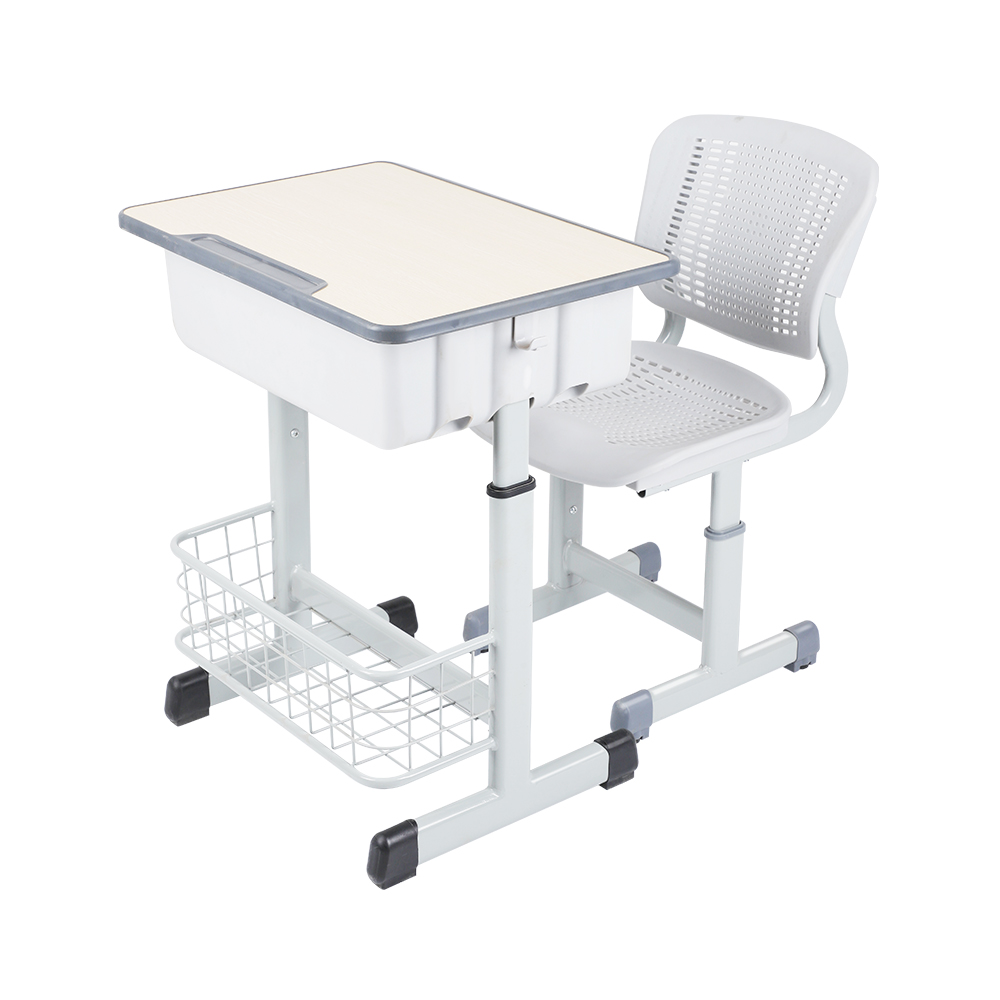
Educational institutions vary widely in classroom size, student age groups, and teaching approaches. For instance, primary schools may require smaller, rounded-corner desks for young learners, while high schools need larger workspaces to accommodate laptops and experimental equipment. As a result, standardized furniture may not always meet specific requirements. Customization allows schools to select desk and chair features that better support daily routines, such as adjustable height settings for growing students or integrated storage compartments for classroom supplies.
Common customization requests include adjustments to dimensions, finishes, and structural components. These options help ensure furniture fits well within available space while supporting student comfort. For example, schools with narrow classrooms can opt for slim-profile desks with optimized leg designs to improve aisle space. At the same time, those pursuing a specific campus aesthetic can choose finishes that match existing architectural elements.
While customization offers flexibility, it must still align with safety and compliance considerations. CE-certified production processes ensure that customized desks and chairs follow established guidelines related to stability, load-bearing capacity, and material suitability—critical factors for protecting students from potential hazards. The factory’s professional quality control team conducts rigorous tests on each customized design, from material toxicity inspections to structural durability assessments.
Customization within these frameworks allows schools to personalize furniture without compromising reliability. Design adjustments are carefully evaluated to maintain consistency in structural performance and daily usability. This balance of flexibility and compliance gives schools peace of mind, knowing their customized furniture meets both educational needs and safety standards.
Customization is particularly relevant for large-scale educational projects where consistent design across multiple classrooms is important. OEM-based approaches allow schools and educational groups to specify requirements—such as branded logos, unified color schemes, or specialized functional modules—while maintaining standardized production quality. The factory provides one-stop project support, from initial design consultation and sample production to batch manufacturing and on-site installation guidance.
Through structured development processes, customized furniture can support coordinated classroom layouts and efficient installation planning. This approach helps schools achieve visual consistency across different learning spaces, whether it’s a science lab, art studio, or regular classroom, and streamlines the overall project timeline by avoiding mismatches between furniture and space.
Customized desks and chairs help schools create environments that reflect their educational identity. Furniture that aligns with classroom activities can improve organization and space utilization—for example, collaborative learning spaces can be equipped with modular desks that can be easily rearranged into group configurations. Students also benefit from furniture that feels tailored to their learning environment, which can boost their sense of belonging and focus on academic tasks.
From a management perspective, customized furniture simplifies long-term planning by aligning physical resources with instructional goals. It also reduces maintenance costs in the long run, as furniture is designed to withstand the specific usage patterns of the school, such as high-frequency use in busy classrooms or special wear resistance for art and craft rooms.
Customization continues to shape how schools approach furniture selection. A CE Certified School Desk and Chair Factory supports this trend by offering adaptable designs within compliance-focused processes, backed by professional design teams that can translate schools’ unique needs into practical, safe furniture solutions. Customized desks and chairs help schools build functional, cohesive learning environments that support daily educational activities, fostering a more productive and comfortable space for both teachers and students.

Live up to the trust of every customer and strive to create high-quality Shanfeng.
Find Us
Product Center
Contact Details

 English
 русский
 عربى
عربى
 中文简体
中文简体
