Flat floors have a problem. The person in front blocks the view. You lean left. You lean right. You still miss half the action. Tiered seating solves this. Each row sits higher than the one in front. Everyone sees over the person ahead. No craning necks. No blocked sightlines.
Each row is elevated above the row in front
A flat floor has one level. Front row, back row, same height. Tiered seating uses steps or ramps. The back row might be 2 meters higher than the front. The difference depends on how many rows and how far the seats are from the stage.
The riser height per row is usually 30 to 45 centimeters. Enough to clear the head of the person sitting in front. Not so high that climbing stairs becomes hard.
Sightlines determine the layout
The goal of tiered seating is simple. Every person sees the entire stage or screen. The seating layout starts with the worst seat in the house — usually the top corner. If that person can see, everyone can see.
Designers use sightline formulas. The riser height, row spacing, and seat height all work together. Change one number, and the view changes.
School auditoriums and lecture halls
A school theater needs tiered seating so students in the back see the stage. The seating is usually fixed. Bolted to concrete or steel risers. Rows are wide enough for students to pass without stepping on feet.
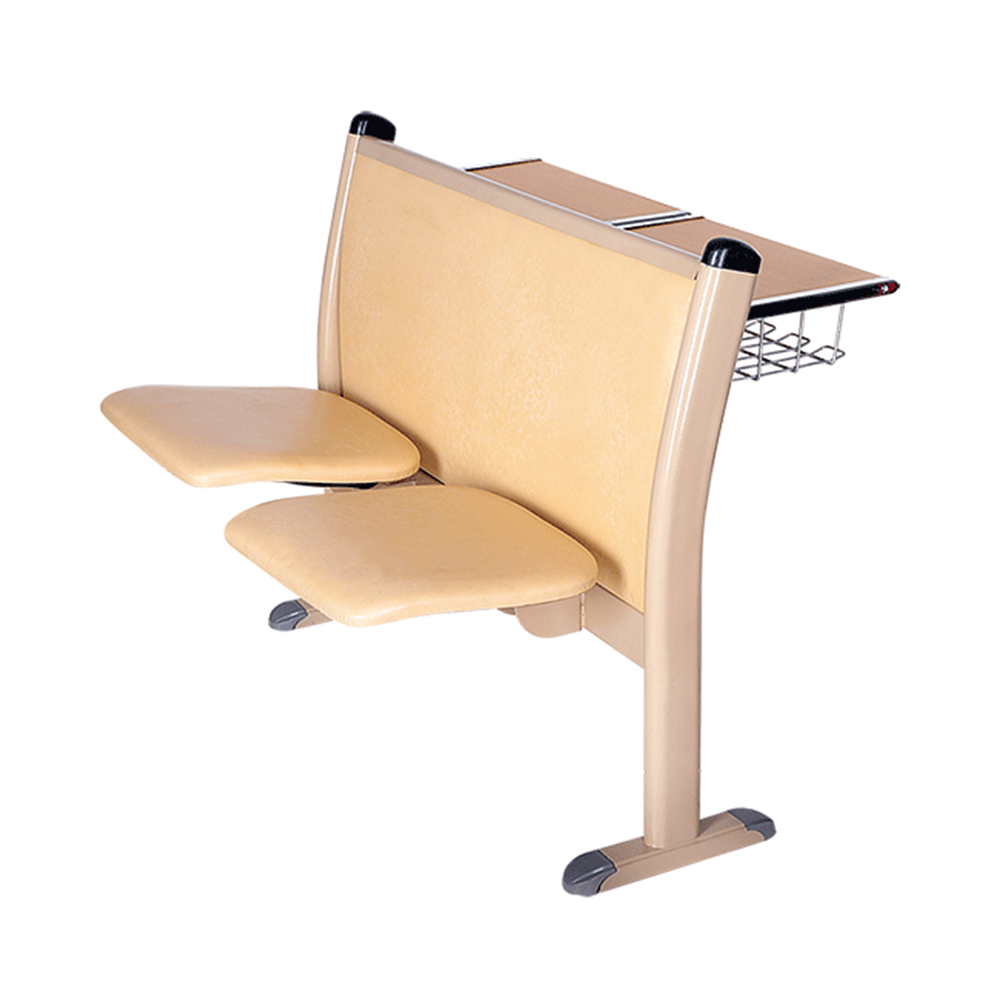
Lecture halls use tiered seating too. The professor needs every student to see the whiteboard. Tablet arms fold up for writing space.
Professional theaters and concert halls
Theaters take tiered seating seriously. The slope is steeper. The rows are closer together. Every seat has a slightly different view, but all are good. Some venues add boxes — small raised platforms on the sides.
Concert halls use shallower slopes. Music does not require seeing every detail. Comfort matters more. Legroom is generous.
Sports stadiums and arenas
Stadium seating is the bad tiered seating. Steep slopes. Tight rows. The goal is packing as many people as possible while still giving everyone a view of the field. Bleachers are the simplest form. No backrests. No armrests. Just rows of benches going up.
Riser height and row spacing for comfort and safety
Building codes limit how steep tiered seating can be. Steps need to be a safe height. 18 centimeters big riser height. 25 to 30 centimeters small tread depth.
Row spacing matters for legroom. A tight theater might have 80 centimeters from seat back to seat back. A comfortable lecture hall uses 90 to 100 centimeters. Premium venues go to 110 centimeters or more.
Here is what row spacing affects:
Seat attachment method affects maintenance
Seats bolt to the risers. In fixed tiered seating, the bolts go into concrete or steel inserts. The seat stays put. Maintenance is small.
In removable tiered seating, seats clamp onto tracks or use flip-up mechanisms. The venue can change the layout. More flexibility. More things to break.
Aisle placement for emergency exit
Aisles run vertically down the slope. Building codes require a certain number of aisles based on how many seats per row. A tiered seating layout with too few aisles fails inspection.
Aisles also need handrails. The slope can be steep. People lose balance. Handrails catch them.
The risers flex when people walk
Cheap tiered seating uses thin plywood or light-gauge steel for the risers. People walk. The riser bounces. The person in the seat feels the vibration. Annoying. Also unsafe if the bounce gets worse over time.
Better risers use thicker plywood or heavy-gauge steel with cross-bracing. No bounce.
Seat bolts loosen from vibration
People sit down. They stand up. The seat vibrates. The bolts loosen. A tiered seating row with loose bolts wobbles. The seat moves side to side. The occupant feels unstable.
Good seats use lock washers or thread-locking compound. The bolts stay tight.
The slope is too steep for comfort
A venue wants more seats. They make the tiered seating steeper. More rows fit in the same floor space. But too steep, and climbing feels dangerous. People hold the handrails tightly. They move slowly. Concession lines back up.
Safe slopes exist for a reason. Steeper is not better.
Tiered seating turns a bad view into a good one. Flat floors force people to sit in the front. Everyone else strains to see. Raised rows let everyone see over the person ahead.
For schools, theaters, and stadiums, the choice is not whether to use tiered seating. It is how steep, how wide, and how many seats per row. Work with a supplier who understands sightlines. Check building codes before finalizing the layout. Test a sample row before ordering hundreds of seats.
A well-designed tiered seating installation makes every seat feel like a good seat. That is the whole point. Your audience sits down. They see the stage. They do not think about the seating at all. That is success.

Live up to the trust of every customer and strive to create high-quality Shanfeng.
Find Us
Product Center
Contact Details

 English
 русский
 عربى
عربى
 中文简体
中文简体
