A cafeteria table is not furniture. It is equipment. It gets used for a few hours each day, but those hours are intense. Students slam trays down. They slide across the bench. They spill milk and ketchup. They carve initials into the surface. A cafeteria table needs to survive all of that. Every day. For years. Here is what buyers look for when choosing one.
The frame needs to handle heavy use without wobbling
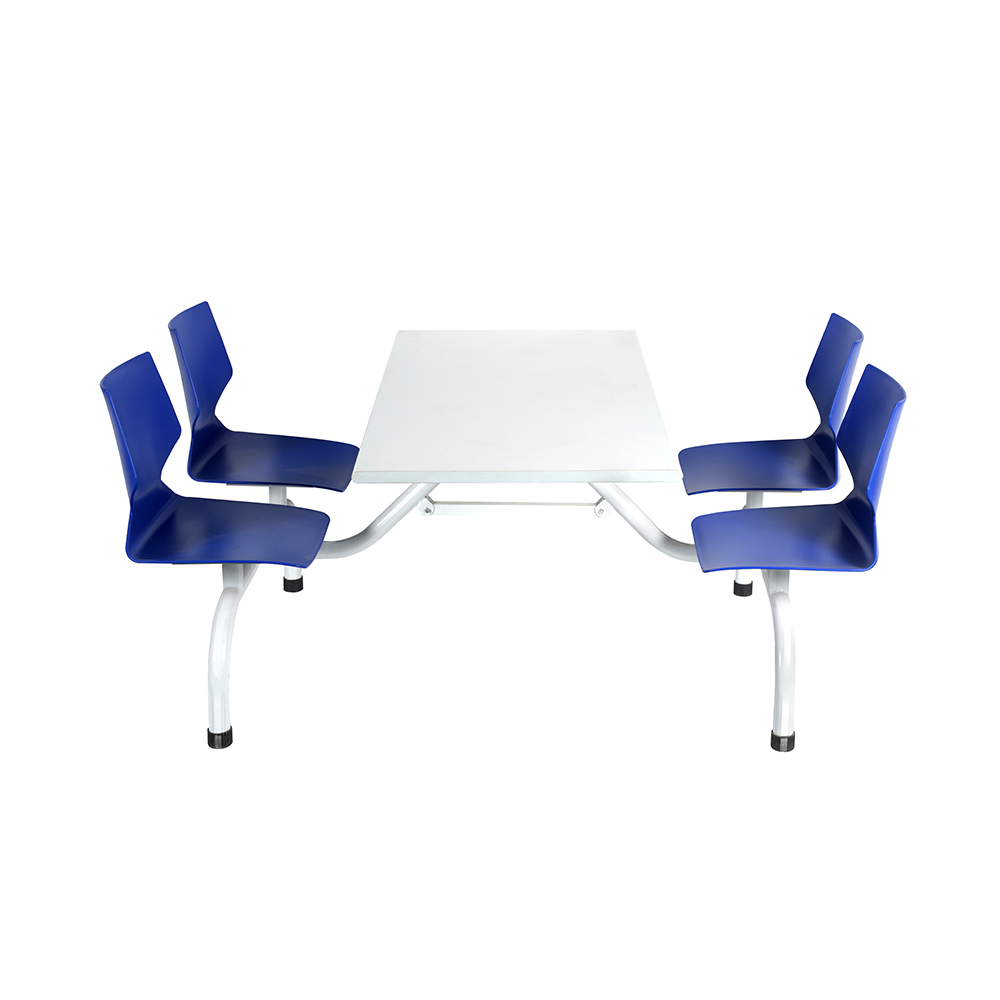
A home dining table has thin legs. Fine for family dinners. A cafeteria table has thicker legs, cross braces, and welded joints. No bolts to loosen. No wobble after six months.
The frame is usually steel. Powder-coated, not painted. Paint chips. Powder coating resists scratches. The table stays looking decent even after years of abuse.
The bench is attached to the table, not separate
Separate chairs get moved. They get lost. They get stacked in corners. A cafeteria table has benches attached to the frame. The whole unit stays together. Students sit down. They get up. The bench stays put.
Attached benches also mean fewer pinch points. No moving chairs to catch fingers. Safer for younger students.
The surface needs to clean easily and resist stains
Cafeteria tables see everything. Spaghetti sauce. Chocolate milk. Grape jelly. A cafeteria table top needs to wipe clean without staining. High-pressure laminate (HPL) is standard. Smooth. Non-porous. Spills sit on top. A damp cloth wipes them away.
Solid plastic tops are another option. Polyethylene. Softer than HPL. Scratches easier. But less expensive. For elementary schools on a budget, solid plastic works.
School lunchrooms from elementary through high school
The biggest market for cafeteria table products is K-12 schools. Elementary schools need lower tables. High schools need taller ones. Adjustable height tables cover both. One product line serves all grades.
Elementary tables also need rounded corners. Safety first. High school tables can have sharper edges. Students are less likely to run into them.
Corporate cafeterias and break rooms
Office workers are gentler than students. But the volume is still high. A cafeteria table in a corporate lunchroom needs to look professional. Wood grain laminates. Neutral colors. Sleeker frames.
The benches still need to be attached. Corporate cafeterias do not want chairs wandering away.
Prison and institutional dining halls
Security matters here. A cafeteria table for institutional use has tamper-proof fasteners. No exposed bolts. The table is bolted to the floor. No tipping. No throwing.
The materials need to be vandal-resistant. Stainless steel or heavy-gauge steel. No plastic parts that can be broken off.
Table height that matches the user age group
A cafeteria table for elementary students is lower. 24 to 26 inches from floor to tabletop. Middle school needs 28 to 30 inches. High school and adults need 30 to 32 inches.
Adjustable height tables are more expensive upfront. They save money over time. One table serves multiple grade levels. Schools buy fewer tables.
Bench height and depth for comfortable seating
The bench should be 16 to 18 inches from the floor. Standard chair height. Depth should be 12 to 15 inches. Deep enough for adults. Not so deep that kids slide forward.
Here is what comfortable cafeteria seating requires:
A cafeteria table with a narrow base tips when students lean on the edge. The base needs to be wide enough. Legs should angle outward or the feet should extend past the table edge.
Floor mounting is an option for permanent installation. Bolts through the feet into concrete. The table does not move. Does not tip. Does not get pushed around.
The laminate peels off the tabletop
Cheap cafeteria table tops use low-quality adhesive. The laminate separates from the core. Edges lift. Water gets under. The top swells. The table is ruined.
Better tables use moisture-resistant particle board and high-quality edge banding. Hot melt adhesive seals the edges. Water stays out.
The bench seats crack at the attachment points
Benches take a lot of weight. Students jump onto them. They bounce. A cafeteria table with weak bench attachments cracks. The bench sags. The welds break.
Good tables use full-length bench supports, not just end brackets. The support runs under the entire bench. Weight distributes evenly.
The frame rusts from mopping and spills
Floors get mopped daily. Spills happen hourly. A cafeteria table with a raw steel frame rusts. Rust stains floor tiles. Rust weakens the frame.
Powder-coated frames resist moisture. Stainless steel frames are even better. More expensive. But they never rust.
A cafeteria table is a long-term investment. Schools and businesses buy them once every 10 to 15 years. The upfront cost matters. The durability matters more.
Look for welded steel frames, powder-coated finishes, HPL or solid plastic tops, and attached benches. Check the height. Make sure the base is wide enough to prevent tipping.
Cheap tables save money today. They cost more in the long run. Laminate peels. Frames rust. Benches crack. Replacements add up.
Buy good tables once. They survive the lunch rush. They survive the spills. They survive thousands of students. That is the point of a cafeteria table. Not to look fancy. To keep working. Day after day. Year after year.

Live up to the trust of every customer and strive to create high-quality Shanfeng.
Find Us
Product Center
Contact Details

 English
 русский
 عربى
عربى
 中文简体
中文简体
