Safety has become a core requirement in the development and procurement of school dormitory furniture, especially for bunk bed systems that are used daily in shared student living environments. A High Quality School Bunk Bed Supplier is often evaluated not only on structural design and material selection but also on whether its products comply with recognized safety certification systems that confirm reliability, durability, and suitability for long-term educational use.
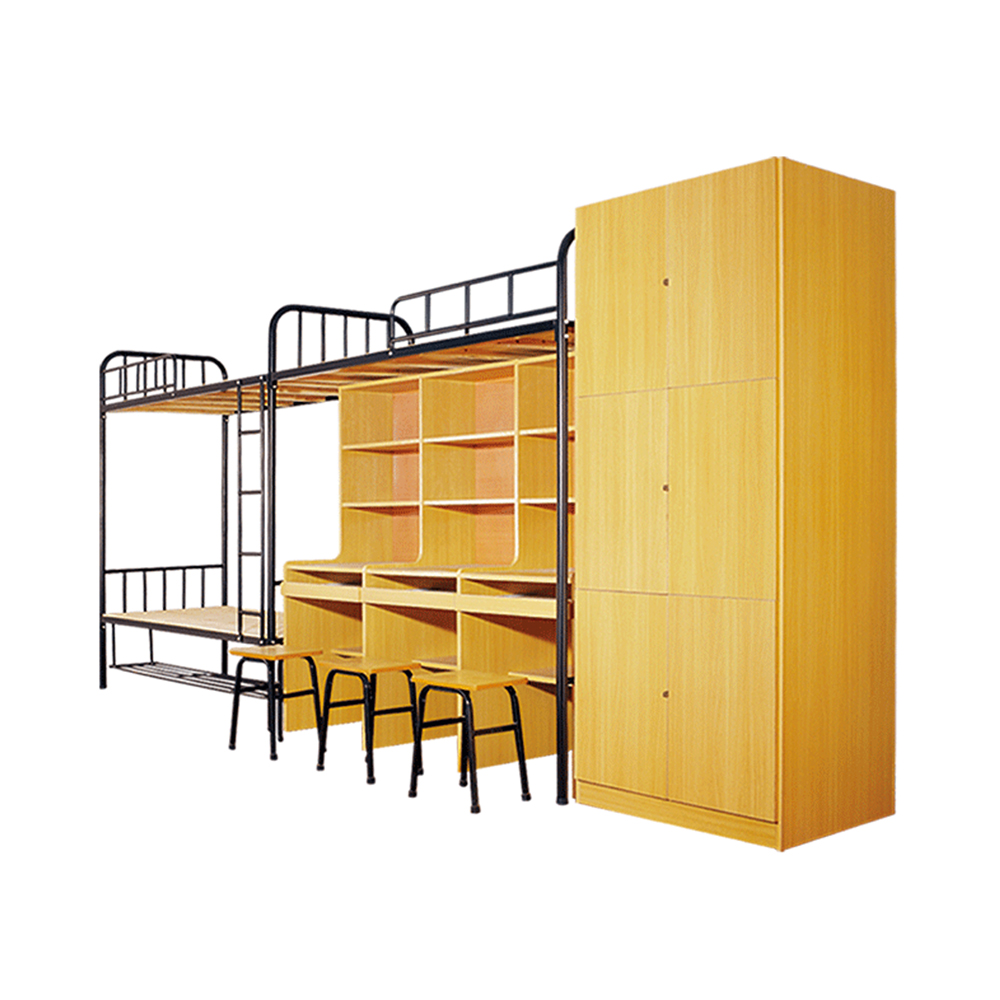
In school dormitories, furniture is exposed to continuous and repetitive use. Students interact with bunk beds multiple times a day, and usage conditions can vary depending on age, behavior, and environmental factors. Because of this, safety certification is considered an important reference point for ensuring that bunk bed systems can maintain stable performance under real-world conditions.
Dormitory environments present unique challenges compared to standard residential settings. Multiple users share the same space, and supervision may be limited during nighttime hours. This makes structural safety and stability especially important.
Bunk beds introduce additional safety considerations due to their vertical structure. The upper sleeping level requires secure support, while ladders and guardrails must function consistently to reduce risks during climbing and resting. Even small structural weaknesses can become more noticeable under frequent use.
Safety in this context includes more than just strength. It also involves connection stability, surface safety, and long-term structural consistency. These factors work together to ensure that the furniture remains suitable for continuous use in educational environments.
Safety certification systems are designed to evaluate whether furniture meets defined technical and safety requirements. These systems usually involve structured testing procedures that assess different aspects of product performance under controlled conditions.
A High Quality School Bunk Bed Supplier typically ensures that products are tested according to relevant certification frameworks. These frameworks may include international quality standards, structural safety testing methods, and material compliance evaluations. In many cases, third-party testing organizations carry out independent assessments to ensure objectivity.
Although certification requirements may differ depending on regional regulations or project specifications, they generally aim to confirm that the furniture is safe for use in environments where long-term reliability is expected.
Safety certification for bunk beds usually focuses on several important performance areas.
One of the main testing areas is load-bearing capability. Bunk beds must support repeated weight over time without deformation or instability. Testing often simulates long-term pressure conditions to evaluate how the structure performs under continuous use.
Stability is another important factor, especially for bunk beds with upper sleeping levels. Certification testing evaluates whether the structure remains balanced under uneven weight distribution or movement. This helps ensure that the bed does not shift or tilt during normal use.
Connection points between bed components are critical to overall safety. These joints are tested to determine whether they can maintain stability after repeated assembly and usage cycles. Weak connections can affect the overall structural integrity of the bunk bed system.
Surface finishes are also evaluated to ensure they are safe for long-term contact. This includes checking coating durability and ensuring that materials remain stable in indoor environments over time.
In educational procurement processes, safety certification documentation is often an important requirement. Decision-makers rely on certification results to evaluate whether products meet the necessary safety expectations before approval.
Without certification evidence, additional evaluation steps may be required, which can slow down procurement procedures. This is especially relevant in large-scale school projects where multiple dormitory rooms are equipped at the same time.
For this reason, suppliers often integrate certification requirements into their product development process. This helps ensure that furniture systems are aligned with procurement expectations from the early design stage.
Certified bunk bed systems provide greater consistency in long-term use. Since school furniture is expected to remain in service for extended periods, stable performance becomes an important factor in planning and maintenance.
Certification processes encourage structured design and controlled manufacturing methods. This contributes to predictable product behavior over time, including stable connections, balanced structures, and consistent material performance.
A High Quality School Bunk Bed Supplier that maintains alignment with safety certification systems demonstrates a systematic approach to product reliability. This helps ensure that furniture systems remain suitable for educational environments where safety and stability are ongoing priorities.
Safety certification also influences how schools and educational planners design dormitory spaces. When furniture systems meet recognized safety requirements, planners can arrange layouts with greater confidence in structural performance.
This contributes to smoother installation processes and reduces uncertainty during project execution. It also supports long-term maintenance planning, as certified products tend to follow more consistent performance patterns.
As educational infrastructure continues to evolve, safety certification will remain an important reference point in evaluating bunk bed systems for student accommodation environments.

Live up to the trust of every customer and strive to create high-quality Shanfeng.
Find Us
Product Center
Contact Details

 English
 русский
 عربى
عربى
 中文简体
中文简体
